
"6 species"
3000 article(s) found

Species Planning of Coffee beans in Kenya
1) Common classification: hand-picked coffee fruit, picked by hand, picked out immature fruit (unripe), overripe fruit (overripe) and other defects, peeled, after about 36 hours of fermentation, placed on a metal grid for sun drying, in the processing plant to remove the seed shell (parchment), become a blue-green appearance of attractive Kenyan raw beans. These beautiful raw beans, roots

The basic knowledge of coffee beans coffee three original species introduction
Coffee belongs to the evergreen shrubs of the genus Coffee of Rubiaceae, centered in tropical regions, with about 500 genera and 6000 species of Rubiaceae plants distributed here. Coffee has long been thought to have certain medicinal effects, such as invigorating stomach, refreshing mind, stopping bleeding, dissipating heat, strengthening body, etc. More famous Rubiaceae plants and gardenia, its fruit has long been dried as medicine

Description of species and Flavor of Starbucks Uganda Coffee Bean producing area
Starbucks Uganda coffee bean production area species flavor description taste manor production area variety introduction Uganda coffee beans have a unique flavor, which is very suitable for making Italian and other flavors of coffee. More importantly, Ugandan coffee beans are strictly screened in accordance with the standards of the international market to ensure their high quality and pollution-free characteristics. Contrast: a unique African coffee
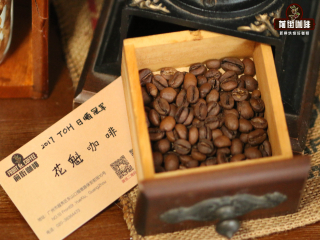
Introduction of Flavor characteristics of Huakui Coffee Bean production area description of the difference between the new Huakui coffee bean and Huakui 6.0
Huakui Coffee Bean refers to the name of an Ethiopian coffee native. It is grown in Humbera in the Guji region and is produced by BukuAbel Manor. It is treated by sun treatment. This bean comes from Hambella, which is located in Guji, the largest coffee producing area in Ethiopia.

Growth Environment and Flavor characteristics of Yunnan Coffee Variety-Kadim Catimor
Professional coffee knowledge exchange more coffee bean information please follow the coffee workshop (Wechat official account cafe_style) Katim (English name Catimor) Yunnan small grain coffee, Rubiaceae, coffee genus, mainly distributed in Lincang, Baoshan, Simao, Xishuangbanna, Dehong and other prefectures. Small grains of coffee are native to Ethiopia or Arabian Peninsula. Main producing area

How to drink Ethiopian sun-dried Guji coffee beans? Flavor characteristics of Gucci Huakui Coffee 6.0 hand-brewed
Professional coffee knowledge exchange more coffee bean information please follow coffee workshop (Wechat official account cafe_style) LUGUOIMPCTIMPCT is a social enterprise providing 26-year-old preschool education in El Salvador, Guatemala and Taiwan; LUGUOCAFE is a

Tanzania coffee bean varieties Tanzania boutique coffee bean varieties SC3, SC11 and SC14
Species of coffee beans in Tanzania, local coffee species: in the past, the coffee species commonly used in Tanzania are Bourbon (N.39) and Kents (KP 423). However, due to the low insect resistance and disease resistance of these two coffee varieties, the coffee quality can not meet the requirements of high-quality coffee, not to mention the world-famous UTZ and Fair trade certification. With the new technology of growing coffee beans

Leaves and flowers of coffee
Coffee leaves opposite, usually two rows spreading, individual single leaf whorl, petiole short, leaf leathery, green (dark green on the upper surface, light green on the lower surface). Glossy oval, oval to long oval. The leaf size of small-grain coffee is relatively uniform, the leaf is small and the end is longer, and the leaf edge wave is obvious, about 12-16 cm long and 5-7 cm wide. The leaves of the medium grain species are long and large, soft and thin.

Varieties of coffee beans in Tanzania, producing areas of coffee beans in Tanzania
Following caf é comments (Wechat official account vdailycom) found that the coffee beans in Tanzania, the local coffee species, opened a small shop in Beautiful Caf é. In the past, the coffee species commonly used in Tanzania were Bourbon (N.39) and Kents (KP 423). However, due to the low insect resistance and disease resistance of these two coffee varieties, the quality of the coffee could not reach that of high-quality coffee.

The basics of coffee beans
Coffee belongs to the evergreen shrub of the genus Rubiaceae, which is centered in the tropics. There are about 6000 species of Rubiaceae belonging to 500 genera. Coffee has always been thought to have certain effects, such as strengthening the stomach, waking up the brain, stopping bleeding, dissipating heat, strengthening the body, and so on. The more famous Rubiaceae plant is Gardenia jasminoides, whose fruit was dried and used as medicinal material a long time ago.

Nicaragua | Secret Manor Natural decaffeinated Bourbon Laurina species | Honey treated Lot 180
Professional coffee knowledge exchange more coffee bean information please follow the coffee workshop (Wechat official account cafe_style) Nicaragua | Secret Manor Natural decaffeinated pointed bourbon Laurina species | Honey-treated Lot 1802 flavor? Pointed bourbon original Laurina or Bourbon Pointu, her caffeine content is only about 0.6%, normal Arabica
Basic knowledge of boutique coffee leaves and flowers of coffee
Coffee leaves opposite, usually two rows spreading, individual single leaf whorl, petiole short, leaf leathery, green (dark green on the upper surface, light green on the lower surface). Glossy oval, oval to long oval. The leaf size of small-grain coffee is relatively uniform, the leaf is small and the end is longer, and the leaf edge wave is obvious, about 12-16 cm long and 5-7 cm wide. The leaves of the medium grain species are long and large, soft and thin.
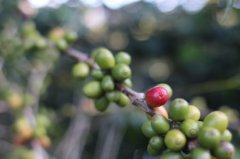
The Leaf of Coffee and the growth process of Coffee Flower
Coffee leaves opposite, usually two rows spreading, individual single leaf whorl, petiole short, leaf leathery, green (dark green on the upper surface, light green on the lower surface). Glossy oval, oval to long oval. The leaf size of small-grain coffee is relatively uniform, the leaf is small and the end is longer, and the leaf edge wave is obvious, about 12-16 cm long and 5-7 cm wide. The leaves of the medium grain species are long and large, soft and thin.

Growth status of boutique coffee trees leaves and flowers of coffee
Coffee leaves opposite, usually two rows spreading, individual single leaf whorl, petiole short, leaf leathery, green (dark green on the upper surface, light green on the lower surface). Glossy oval, oval to long oval. The leaf size of small-grain coffee is relatively uniform, the leaf is small and the end is longer, and the leaf edge wave is obvious, about 12-16 cm long and 5-7 cm wide. The leaves of the medium grain species are long and large, soft and thin.

Meng Lian Mangzhang Manor | Sun Katim flavor | how to drink Yunnan coffee?
Professional coffee knowledge exchange more coffee bean information please follow the coffee workshop (Wechat official account cafe_style) Yunnan was first introduced by French missionaries in 1902, there are still 24 coffee trees more than 90 years old in Zhukula Township, Binchuan County. In 1914, the border people of the Ruili Jingpo nationality were introduced from Burma to Nongxian Village. The variety types are small grain species, medium grain species and large grain species. Straight stem

A brief introduction to the difference between the flavor characteristics of Ethiopian coffee beans recommended by Huakui 6.0 and Yega Xuefei
Professional coffee knowledge exchange more coffee bean information please follow the coffee workshop (Wechat official account cafe_style) front street-Yejia Xuefei, Huakui flavor brewing sharing Saifu has unique natural conditions, suitable for growing all imaginable coffee varieties. Ethiopian coffee beans as

Costa Rican Coffee individual Coffee Historical Origin and quality
The history of coffee cultivation in Colombia can be traced back to the Spanish colonial era in the 16th century, and there are many theories about the history of coffee in Colombia: one: it is said to come from the island of Haiti in the Caribbean and from El Salvador in Central America. Second: in 1808, a priest introduced coffee beans to Colombia for the first time from the French Antilles via Venezuela. One of them
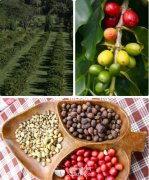
Coffee classification
Special classification system of coffee: 1. Subgenus Coffea: 2. Malagasy coffee subgenus: 3. Subgenus Pala Coffee: 4. Age coffee subgenus: a, red coffee group: B, thick-skinned coffee group: C, Mozambican coffee group: d, black fruit coffee group E, dwarf coffee group: red fruit coffee group: a) Arabica species: Tibica varieties: (Tp)
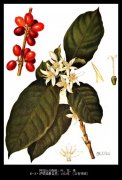
The backbone of coffee trees.
Coffee is a shallow root crop, and the plants propagated with seeds have conical roots. Root system refers to the general name of root. The root morphological distribution and depth of shade varieties / soil conditions and agricultural technical measures are different. From the point of view of varieties, the roots of small / medium grain species are shallower, while those of large grain species are deeper. Under normal circumstances, there is a thick and short taproot and many well-developed lateral roots. Yunnan small-grain coffee has a 4-year-old fruit.
The backbone of the coffee tree
Coffee is a shallow root crop, and the plants propagated with seeds have conical roots. Root system refers to the general name of root. The root morphological distribution and depth of shade varieties / soil conditions and agricultural technical measures are different. From the point of view of varieties, the roots of small / medium grain species are shallower, while those of large grain species are deeper. Under normal circumstances, there is a thick and short taproot and many well-developed lateral roots. Yunnan small-grain coffee has a 4-year-old fruit.